Trieste e la sua Riviera            Triest und seine Riviera 

Reiseführer - Duino & Sistiana - Guida Turistica 


Noble Castles and rocky Beaches 
 
The train rarely stops between Venice and Trieste. But this is a blessing for the those willing to go a little off the beaten track and discover local villages perched on cliffs, their noble castles and rocky beaches.
 
These places may not be as prepared for the international visitor as, say, Cinque Terre or the Amalfi Coast, but their views are as breathtaking and their tranquility isn't matched anywhere else in the country. 


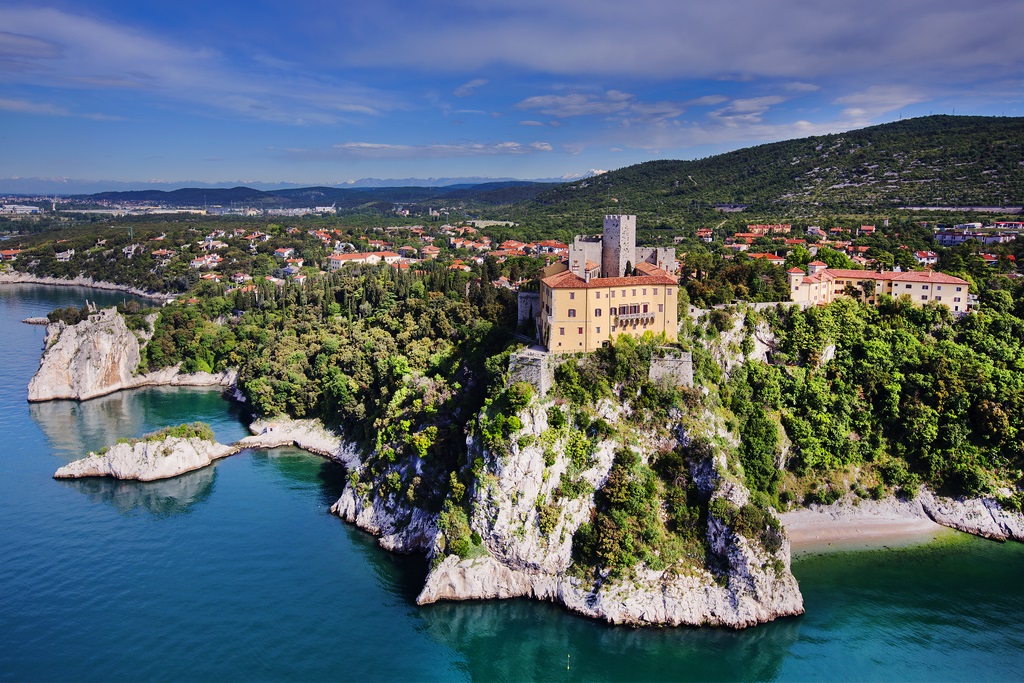
Il Castello di Duino è inserito in un contesto territoriale di spiccato interesse paesaggistico, architettonico, artistico e culturale. Si trova nelle immediate vicinanze della città di Trieste e, ovviamente, ruota nell'orbita dell'influenza del grande capoluogo, forte del suo glorioso passato e proiettato nel futuro, situato nel punto cruciale di incontro tra le varie culture, tra quella Mediterranea e quella Mitteleuropea, tra l'Occidente, i Balcani e l'Oriente.
Duino con i suoi dintorni è estremamente ricco di attrattive, costituite da magici intrecci fra storia, ambiente naturale, artigianato e prodotti tipici. Dal punto di vista paesaggistico il territorio di Duino-Aurisina è un unico, sorprendente, mix di ambiente costiero mediterraneo che comprende la splendida baia di Sistiana con la favolosa spiaggia; la montagna carsica, con le sue scenografiche rocce erose dall'acqua e dai venti; i luoghi storici della prima guerra mondiale, raggiungibili a piedi o in bicicletta. L'ambiente carsico è il paradiso dei botanici; qui convivono sia la macchia mediterranea, sia la flora illirica e quella centro-europea. La fauna, annovera oltre a caprioli, tassi, cinghiali, volpi, lepri e scoiattoli, anche alcuni rapaci fra cui il falco pellegrino, che da alcuni anni nidifica sulle pareti rocciose a picco sul mare.
 
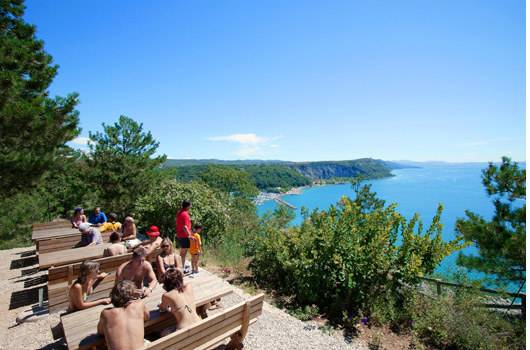
Sistiana Bay is the best  beach resort in Trieste.
 
 
Looking for a relaxing day at the beach where children can be entertained with plenty of activities and play safely in shallow water ?
 
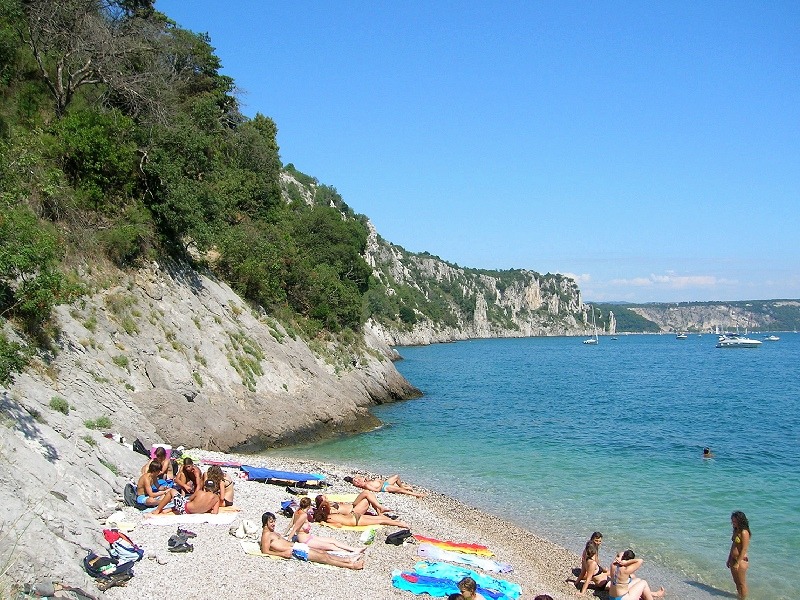
There are two beautiful pebbly beaches in the bay, Caravella beach, backed by a steep mountain, and Carstelreggio.The beaches of this area are very frequented. You'll find it hard to tear yourself away.Right on the beach there is a diving center, fruit and ice-cream stands, coffee bar and a beach restaurant. 
If you are not a fan of crowds, hustle and bustle, the area south of Sistiana have many other spots & secluded areas for a swim. 
 To find more privacy and less people you can also walk south or rent a kayak for a perfect romantic day exploring little coves and surely you will discover the perfect place for you.  Extraordinary scenery, Mediterranean scents and surreal beauty of water and sky color, will soon make you forget about the time. In the well-indented coastal area with a number of small bays, hidden within dense vegetation, you will often come across naturists. Although the beaches are not specified as naturist, many people choose to enjoy the sea and the sun in this way.


Novita' al castello dei Principi  di Duino
È ora aperto alla visita del pubblico il bunker costruito dall'esercito tedesco durante la seconda guerra mondiale alle pendici del Castello di Duino, fra le rocce a picco sul mare, e ora trasformato in un museo con cimeli dell’epoca.
Destinato ad essere inserito come una nuova attrazione all’interno di un percorso turistico sempre più intenzionato a dare visibilità ai cimeli storici dei grandi conflitti del Novecento, il bunker del Castello di Duino fu costruito dalla marina tedesca come fortificazione della cosiddetta “linea Bertha”, la linea difensiva che i tedeschi avevano approntato per coprire la capitale del Litorale Adriatico, Trieste, nei punti in cui prevedevano un potenziale sbarco dell’esercito nemico. 
La Baia di Sistiana rappresentava proprio uno dei punti di maggior pericolo ed è per questo che all’interno della residenza principesca, occupata dalle truppe germaniche dopo l’8 settembre 1943, fu realizzata questa struttura in parte scavata nella roccia, profonda 18 metri e dotata di un’entrata superiore e una inferiore.Castello di Duino, un bunker del 1943: Il bunker
Oggi nella grande sala centrale sono state allestite una serie di vetrine con cimeli dell’epoca: uniformi, armi, elmetti ed altri ricordi della seconda guerra mondiale e della successiva occupazione anglo-americana. Sono stati installati anche quattro pannelli con la planimetria del bunker, le foto della Baia di Sistiana ( allora base della Kriegsmarine) com’era negli anni fra il 1944 e il 1945, una serie di articoli giornalistici dell’epoca e la testimonianza del ritorno al Castello di Duino, che nel frattempo era divenuto sede del Governo del Territorio libero di Trieste, del Principe Raimondo Thurn und Taxis . Sono esposte, inoltre, anche le testimonianze empiriche di un corso per sottufficiali italiani realizzato dai nazisti dentro il Castello durante la loro occupazione.
Dal 1947 al 1954 il Castello di Duino fu  la sede del Governo del Territorio Libero di Trieste. Sulla sua torre sventolava la bandiera nazionale  rosso-alabardata ,  l' esemplare che ora si trova conservato a Londra all'  Imperial War Museum. 


Parco Piscine Duino - via della Stazione 4

4 PISCINE RISCALDATE     IDROMASSAGGIO


THE WHITE LADY

Like other ancient castles, Duino too had its own legend. In our case it is the legend about the White Lady. At one time a knight lived at Duino fort. He was a very nasty man, who disdained his consort, because she was very graceful and virtuous. His dislike for her turned into hatred, and one evening he attracted her to a rock above the sea, so that he could descend her into the depth. Horrified the chatelaine looked toward the sky, and tried to cry out, but something hindered her to express her horror and she remained petrified in her great pain. Since then, towards midnight, the White Lady gets up from the cliffs and begins to wander about in the castle's rooms, until she finds the cradle, in which once upon a time her son slept. There, she remains in silence until daybreak. Then, she returns to the rock, where the pain transforms her anew into the stone.The rock called White Lady is to be found under the ancient Duino castle, which was erected on a rocky hill somewhat lower in respect to the present-day castle. Only the ruins remained from the castle. Because of its whiteness, this rock is called Dama Bianca   and when the fishermen are active in the Gulf of Trieste, it serves them as an orientation sign, when an unexpected tempest surprises them at sea.

Fürstliches Schloss von Tybein - Duino


Illustre Gäste weilten einst an diesem Ort: Rainer Maria Rilke, Franz Liszt, Richard Strauss und  Franz Ferdinand, Erzherzog von Österreich.
Und Paul Valery, Victor Hugo, Gabriele D'Annunzio, Mark Twain, Eleonora Duse, Kaiserin Elisabeth und Franz Josef.
 Den Touristen öffnet jetzt das Schloss Duino seine Pforten.


Schloss Duino

"Vielleicht gibt es in ganz Italien keinen Ort, der so sehr eine Idee von der intellektuellen Atmosphäre des späten 19. Jahrhunderts vermittelt wie dieses Schloss. Hier entstand ein poetischer Mythos, der bisher nicht zu besichtigen war.


Das Werk Rilkes ist auch in Italien sehr beliebt". Das kleine Dorf Duino ist aus zwei Gründen bekannt: erstens ist hier der Sitz des von der UNESCO gegründeten berühmten United World College und zweitens besitzt der Ort einen Prinzen mit seinem Schloss und der dazu gehörigen Familie. 


DOLCE FAR NIENTE

Eine noch unberührte Natur erwartet hier den Besucher, ein absolut sauberes Meer und viele schöne Dinge, die es zu entdecken gilt. Man kann ohne weiteres den winzigen Hafen von Duino erreichen (etwa vierzig Boote finden hier Platz), badet im Schatten des vorkragenden Felsens der Dama Bianca, und geht dann zum Aperitif in das gleichnamige Restaurant, das sich nur wenige Schritte von der Anlegestelle befindet. 
 Eine steile Treppe führt in die Dorfmitte, und wenn Sie den Weg zum Schloss einschlagen, treffen Sie auf den Rilke-Wanderweg. Die Landschaft ist wirklich einzigartig: der Karst trifft auf das Meer ? und der Blick gleitet ?über den ganzen Golf von Triest.  Der lange Wanderweg folgt hoch über den Felsen fast immer dem Lauf der Küste,  der Spaziergang lohnt sich auf jeden Fall.
"Es gibt auch keinen anderen Ort für Rilke, an dem er sich in Italien so wohl fühlte wie in diesem Schloss. Bei allem, was er über Italien schrieb, scheinen ihm die Monate mit Maria die bewegendsten gewesen zu sein. Deshalb bedeutet die jetzige Öffnung des Schlosses, dass Rilke-Liebhaber endlich die Möglichkeit haben, dieses Traumschloss deutscher romantischer Dichtung zu besuchen. Rilke liebte diese Landschaft".
       Duino e Sistiana Webcam - Temperature
 
Duino con Sistiana forma un’incantevole località che sorge alle porte di Trieste ed affaccia sulla una delle coste più belle di tutto il Mediterraneo. Vi sono numerosissimi reperti archeologici. In questo punto il Carso ed il mare si incontrano dando vita ad un’imponente tratto di costa con delle caratteristiche naturalistiche uniche al mondo. Questa incantevole costa si fonde in bellezza con la costiera triestina. Nell’antico borgo di Duino, i romani vi costruirono delle torri di controllo sfruttando la particolare posizione del paese che appariva come un ottimo punto di osservazione della costa. Vi si trovano anche due Castelli di cui il più recente, cinquecentesco, oggi appare come un insieme di torri ed edifici intorno ad un cortile interno con uno splendido parco. Tra le cose da vedere: tra le principali attrattive turistiche ci sono: la Grotta del Mitreo (luogo di culto pagano di epoca romana), il Castello di Duino, la Chiesa gotica di San Giovanni in Tuba. Tra i beni ambientali ricordiamo il Parco del Timavo, il Sentiero Rilke, il percorso naturalistico del Monte San Leonardo e le passeggiate panoramiche della Salvia, Gemina, Weiss
 
Trieste Adventure Park è il primo parco di divertimenti che con i suoi percorsi acrobatici sugli alberi ti farà vivere le emozioni più forti.
Camminerai sospeso nell'aria a più di 15 metri di altezza, ti lancerai nel vuoto per afferrare una liana come Tarzan della giungla, ti troverai in situazioni estreme dove solo la tua abilità ed il tuo coraggio potranno aiutarti!!!
Tutto questo lo potrai vivere al Trieste Adventure Park, ma non solo!
LUST AUF EINE KLEINE KREUZFAHRT ?
SEA SERVICES - SCHIFFSFAHRT
NAVIGAZIONE - NAVIGATION
 Golf von Triest / Gulf of Trieste


TRIESTE - BARCOLA - SCHLOSS / CASTLE MIRAMARE   3 €


TRIESTE  -MUGGIA   3 €


TRIESTE - Portorose - Parenzo - ROVIGNO  6 / 12 / 18  €


TRIESTE -  GRADO  5

Urlaub Italien
Online-Reisefuehrer.com bietet Informationen und Reisetipps für einen Italien Urlaub

Some people are a bit dissapointed with the fact that the eastern part of the Gulf of Trieste  doesn't abounds in sandy beaches, but you will often hear same people later saying that this is maybe even better because this is the reason sea water is so clean and crystal clear. 
And when we say crystal clear, we really mean it.
Der Park des Schlosses von Duino dehnt sich auf verschiedenen Ebenen aus, mit Blumenkaskaden, die mit ihrer bunten Blütenpracht für stimmungsvolle Abwechslung in der klassischen Vegetation des Mittelmeers sorgen.
Besondere Pflege kam dem Park durch Prinz Raimond von Thurn und Taxis zu.
Er kam 1954 nach Beendigung der englischen Besatzung wieder in den Besitz.

Der Park wurde mit seinem heutigen Aussehen Mitte des 19. Jahrhunderts durch Prinzessin Marie von Thurn und Taxis geschaffen und 1956 durch den Enkel Raimond neu angeordnet sowie in späteren Jahren - 1988 und 2003 - im Auftrag von Prinz Carlo Alessandro neugestaltet. Nach dem ersten Eingriff erhielt das Schloss, mit dem Meer im Hintergrund, eine Terrassierung, auf der eine mediterrane Macchia entstand.

Bewachsen mit Zypressen, Pinien und Eiben, die zum Schutz vor dem Bora-Wind und der salzhaltigen Luft des Meeres dienen.
Ein Wald, der einen Teil der Küste bestimmt und sie vor dem heftigen und kalten Triester Bora-Wind schützt, der über diese extreme Spitze des Mittelmeeres weht, manchmal mit Geschwindigkeiten bis zu 100 Stundenkilometern.

In der Macchia schuf Prinz Raimond vom Wind geschützte Felsspalten, die er mit Blumen auffüllte, und einen mit Rosen dichtbewachsenen Irrgarten, dessen Wegraine mit Bignonien-Schling- und Bleiwurzsträuchern sowie mit Valeriana- und Salvia Splendes-Beeten gesäumt sind. Diese Wege öffnen sich unvermittelt und geben den Blick auf ein gepflegtes Parterre frei. Hinter dem Brunnen führt ein enges Gässchen zu einem "Rasen-Gemach".

Der antike Wassergraben, einst bis zum Rand mit Wasser gefüllt, ist heute ein Blumenteppich. Von oben rieselt ein Blütenregen antiker Heckenrosen herab, während sich unten Impatiens und Margeriten vermischen und in einem Winkel enorme Hortensiensträucher wachsen.
Auf der zweiten Ebene des Parks beginnt ein Wegenetz, das sich in der Macchia verliert. Eine herrliche Rosengalerie, gestützt durch eine Statue, in eine Zypressenallee, mit Blick auf das alte Schloss von Duino.
Unten, hinter den Flatterulmen, den knotigen Bäumen, die auf Fels wachsen und wunderschöne rote Beeren haben, zeigt sich das Meer und eine malerische Bucht. Richtung Küste öffnet sich der Park und gibt weite Lichtungen frei, umrahmt von Zypressen und Magnolien, während eine Zypressenallee, mit einem Blütenteppich aus Impatiens, zum Schloss zurückführt.


> DUINO SISTIANA HOTELS RESTAURANTS B&B PENSIONI


PORTE APERTE AL CASTELLO


"La decisione di aprire al pubblico il Castello di Duino e il suo parco nasce dal desiderio di dare, d'ora in poi, ai turisti di tutto il mondo, l'opportunità di condividere con noi l'emozione che l'incantevole bellezza di questo luogo ha riservato finora solo ai nostri avi (che lo hanno abitato da cinque secoli) e, di volta in volta, ai loro ospiti". Questo  quanto ha dichiarato nel 2003  il Principe Carlo Alessandro della Torre e Tasso nel corso della conferenza stampa tenuta a Palazzo Bovara di Milano, motivando la scelta di aprire al pubblico,  la propria dimora storica, arroccata su uno sperone roccioso a picco sul Golfo di Trieste, destinata a diventare non solo una nuova meta turistica ma anche una prestigiosa sede per eventi culturali, convegni, seminari e raffinate cene di gala.  Il fatto che la famiglia dei von Thurn und Taxis  e  imparentata in passato con i casati dei Bonaparte, degli Hofer-Walsassina, degli Hoenlohe, dei reali di Grecia e di Danimarca, continuerà a vivere stabilmente nel castello conferirà sicuramente a questa dimora storica un aspetto ancora più accogliente, lontano dalla fredda austerità "museale" di molti altri castelli italiani. Si tratta di uno dei pochi casi, in Italia, mentre è un fenomeno assai diffuso all'estero, specialmente in Inghilterra, dove le dimore storiche, a cominciare da quelle della stessa famiglia reale, sono regolarmente aperte al pubblico. A Trieste, "Da sei, sette anni, stiamo registrando un trend turistico molto positivo, in controtendenza rispetto ad esempio alle regioni italiane o della ex-jugoslavia".La nostra provincia è ormai nella Top-ten delle destinazioni turistiche italiane, senza che nessuno in Italia se ne sia accorto !!!!!

L'irripetibile Trieste dopo anni di inspiegabile oblio  stata scoperta dal turismo in modo inarrestabile ( le presenze annue arrivano ad oltre un milione ), ed  ogni anno sempre più meta di innumerevoli turisti e crocieristi , soprattutto di lingua tedesca ( ma, ultimamente, anche moltissimi  francesi, americani, inglesi, giapponesi e russi e italiani ). La Riviera di Trieste con il suo splendido clima, paragonabile a quello della Costa Brava,  può offrire molte possibilità per il turismo, grazie alla sua particolare situazione interculturale, nell'ambito dell'arte, spettacolo, sport, enogastronomia". A chiusura della conferenza stampa si è paragonato il castello di Duino alla "gemma più brillante nel diadema che incorona la città di Trieste e ne fa una costa di sogno".

S.S. 14   The Coastal Road - Küstenstrasse Duino/Sistiana/Trieste
According to WTO ( World's Tourism Organization)  the triestine coastal road is among the 20 most beautiful roads in the world.
There are many destinations along the narrow coastal road, with its hairpin turns and tunnels that plough right through the steep sharp rock. Well-known Miramare appears and departs on your left.  Let the whitewashed castle pass behind you and a glimpse of Duino's own castle will appear in the distance. 
 Ask the driver to let you off in Duino's main piazza, some 20 minutes from Trieste. It's a modest square: the defensive gate of the castle on one side (opened to visitors except during its famous classical music competition in summer), a few local bars on the other. Most of these buildings belong to the United World College of the Adriatic, a peace project run by Queen Noor of Jordan and Nelson Mandela. During the school year, it is not unlikely that you will see young internationals wearing their national costumes milling around the piazza. Duino's main attractions and sources of tranquility, however, lie along its coast. Take the gently sloping road on your left down towards the port. A walk of about five minutes will reward you with a cosy marina, a long spit stretching into the Adriatic, colourfully painted fishing boats, and two restaurants with table service outside along the water. 
Paved with polished local stone, the Dama Bianca's terrace sits directly on the water. It's like being at a poolside with discreet step-ladders leading into the sea - but much better as the whole Adriatic stretches before you. A grand blue and white awning shields visitors from the sun as they dine on exquisite seafood pasta and drink cocktails.
Laut der WTO World Tourism Organization unter der 20 schönsten Strassen der Welt.
Nachdem man Duino verlassen hat, führt die Strasse über Sistiana auf halber Höhe an der Küste entlang kurvenreich weiter. Dieser Teil der Riviera ermöglicht einen weiten Blick über den Golf; die ausgedehnte Fläche des Meers verbindet ideell die sich gegenüberliegenden Küsten: auf der einen Seite die Mündung des Isonzo, auf der anderen die Küsten Istriens.


According to local legend, in medieval times, the young princess of Duino's castle fell in love with a local lad. The old prince, learning of his daughter's midnight rendezvous, locked her in a tower and had her lover slain in the courtyard below. Soldiers threw the body into the sea. Despairing, the young princess hurled herself from the tower - her scream turning her to stone as she fell. And so, at nights, locals claim that the Dama Bianca walks the shores looking for her beloved. It also explains why, not far from shore, there is a rock that looks curiously like a woman's fallen body.
 The port's second restaurant, Al Cavalluccio, is next door. It has more of a local flavor, with old men sitting, smoking and watching the calm sea, and could be as good a choice. From there, a promenade along the spit is obstructed only by the many different colours and weaves of fishermen's nets hung up to dry. On your return to the piazza, notice a small sign on your right indicating 'Castello di Duino, XI Secolo'.  Should the gate at the far end of the road be open, you are in for a delightful surprise. Duino's oldest castle, from the eleventh century, is a romantic tumbledown ruin. Built protectively on what seems an island of cliffs, actually connected by a narrow isthmus to the mainland, it is one of the oldest structures on the coast. You can enter the main courtyard by way of an interior staiwell. The views of the coast and Duino's 'new' castle are superb, and with some sure-footing you can see the Dama Bianca's rock in the sea below the main tower. The path is slippery and steep. Students from the United World College regularly jump the barbed-wire fence when the castle is closed, but this is obviously discouraged
 

Click to enlarge

RILKE PROMENADE

Wenn Sie den Weg zum Schloss Duino (Tybein) einschlagen, treffen Sie auf den 4 km. langen Rilke-Wanderweg.
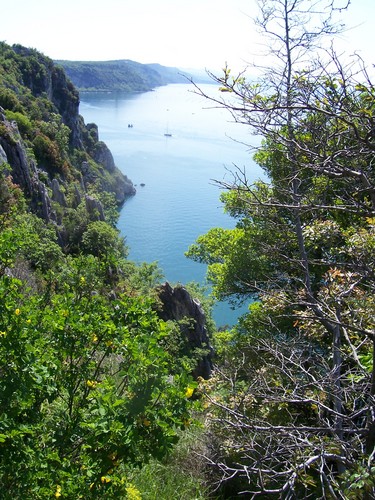
Die Landschaft ist wirklich einzigartig: der Karst trifft auf das Meer,  und der Blick gleitet über den ganzen Golf von Triest.
Für National Geographic ist dies einer der schönsten Wanderwege der ganzen Welt .
 vom Busbahnhof Linie 51 oder 21  / Linie 44
Beim Info-Hauschen (nach dem Campingplatz Mare Pineta in Richtung Triest) parken und den Rilkeweg nach Duino gehen, der wunderschön und romantisch ist und hoch über dem Meer entlangführt. Der Weg endet in Duino und man muss noch einige Schritte die Strasse hinunter zum Schlosstor gehen.
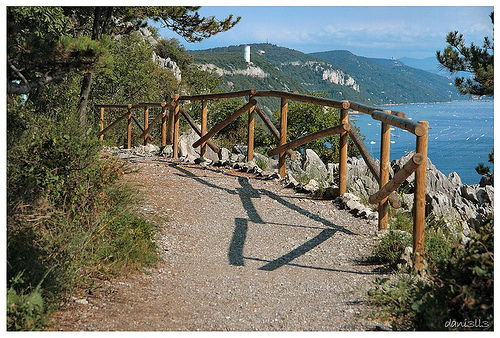
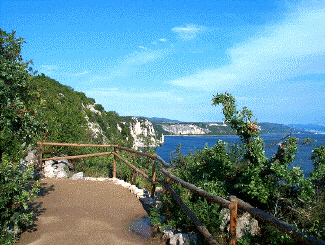
La passeggiata Rilke da Duino a Sistiana si snoda, a picco sul mare, il sentiero della Passeggiata Rilke, per una lunghezza totale di 3000 metri. E' intitolata al poeta Rainer Maria Rilke che, fra il1911 e il 1912, soggiornò nel castello di Duino, ospite della principessa Marie von Thurn und Taxis. E' proprio passeggiando lungo questo sentiero, plasmato nella bianca mole del calcare, che Rilke si ispirò per scrivere i versi delle sue "Elegie Duinesi". Oggi questo sentiero offre agli appassionati delle camminate romantiche un magico incontro con la lussureggiante vegetazione e i panorami mozzafiato che si aprono improvvisamente, tra i rami e i cespugli, sull'infinita distesa del mare. Da alcuni punti del percorso si gode una magnifica vista del Castello di Duino, mentre da altri si può ammirare tutto il golfo di Trieste, fino alla costa istriana.
This beautiful shore path has woods on one side and breathtaking views over the Sistiana Bay and the Gulf of Trieste on the other.
  It is only 3 kilometers long and an easy walk. It starts from the base of the Tourist Office of Sistiana ( Banfield's Square) and ends at the entrance to the Castle of Duino.
 The number 51 bus,  stops across the road at both the heads of the path.
 If you drive, then be aware that there is limited parking space.
You might want to park further down the national road SS14.
According to National Geographic, this is one of the most beautiful paths of the World.
 
Duino - Punta di Nigriniano
Tybein - Servitenkloster

Servitenkloster (Duino)


Rilke 

      "Duino ist die Wolke meines Wesens, fort, fort und in der Entrückung wohnen, nicht wahr, sie fühlen, wie mir's noth tut." So schreibt er an die Schlossherrin Marie von Thurn und Taxis, seine Seelenschwester. Sie bleibt für ihn ein Leben lang die "theuerste Fürstin".
 
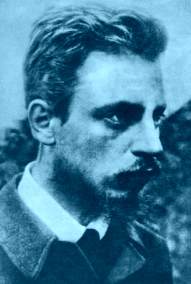
1911 besuchte Rainer Maria Rilke das Schloss von Duino. Er blieb ein Jahr als Gast der Fürstin und verfasste die "Duineser Elegien", eines der bekanntesten deutschen Gedichte überhaupt.
Ende des 19. Jahrhunderts hielten im Schloss von Duino Teresa Thurn-Hoffer Valsassina und ihre Tochter Maria von Thurn und Taxis Hof. Sie öffnete ihre Salons für den kulturellen Jet Set ihrer Zeit. Zu Gast waren Franz Liszt und Johann Strauss, Kaiserin Sissi und der italienischkritische Mark Twain, Paul Valery und auch Rainer Maria Rilke. Der deutsche Dichter war von der gutaussehenden Maria so angetan, dass er 17 Jahre Briefe mit ihr wechselte.
Buchtipp
von Rainer Maria Rilke, Joseph Kiermeier-Debre (Herausgeber)
Duineser Elegien.
Leipzig 1923.
DTV Verlag, 1997
ISBN: 3423026340
Preis: 4,00 Euro
Einen Teil der Duineser Elegien schreibt Rilke dann in der Ainmillerstrasse in München weiter, Hausnummer 34. Nichts gegen die Ainmillerstrasse, aber mit "Ainmiller-Elegien" hätte nicht einmal ein Rilke Erfolg gehabt. Immer und ewig sind sie mit dem schönen Ort
Duino verbunden.


der Hadrosaurus von Duino


 Der größte und vollständigste Hadrosaurus, der je in Italien gefunden wurde: das versteinerte Skelett erreicht eine Länge von 4 Metern und wird derzeit in der Bastion des Schlosses San Giusto in Triest ausgestellt. Auf den herausragenden Fund stießen Forscher Ende der 80er Jahre in der Ortschaft Villaggio del Pescatore, in der Nähe von Duino. 
Der Fossilienfund entpuppte sich als wahrhafter Schatz! Im Zuge der schwierigen Ausgrabungen wurden nicht nur Überreste weiterer Dinosaurier, sondern auch ein Krokodil aus der Vorzeit, Pflanzen, Krebse, Fische und schließlich 'Bruno' gefunden. An 'Bruno' wird derzeit intensiv gearbeitet, um den Fleisch fressenden, 8 Meter langen Dinosaurier völlig rekonstruieren zu können. 
Erstmals werden die im Nordadriatischen Raum (einschließlich Slowenien und Kroatien) gemachten Funde gemeinsam zur Schau gestellt. Auch die Fundstelle kann besichtigt werden. Zu 'Antonios' Zeiten sah diese Region wahrscheinlich dem heutigen Florida ähnlich: sumpfige Küstenebene, üppige Hochstamm-Vegetation und tropisches Klima. 
Nicht weit von der Fundstelle befindet sich der kleine Freizeithafen des ehemaligen Fischerdorfes Duino, wo der Blick von den Ruinen der antiken sagen- und legendenreichen Ritterburg, aber auch vom neuen Schloss der Fürstenfamilie Thurn und Taxis eingenommen wird.
Das Meer des Triestiner Küstenstreifens ist sauber und fischreich. Kleine Buchten wechseln sich mit steil abfallenden Felsen ab, die Vegetation reicht bis zum Wasser. Naturliebhaber können die große Vielfalt an Adria-Meeresbewohnern in der Meeresoase  - gegenüber des Schlosses Miramare - kennen lernen.
Abenteuersuchende hingegen können im Karst die ungewöhnlichsten Dinge erleben. Unweit von der Küste liegt die sehenswerte 'Grotta Gigante', die größte Schauhöhle der Welt. Im 'Höhlenmuseum' von Triest wartet der Grottenolm, ein  'lebendiges Fossil', auf neugierige Besucher.
Die Aura des Ursprünglichen, die dem Original – selbst dem Ort – anhaftet, ist für manche bloß ein idealistisches Konstrukt, für andere eine Frage individueller Sensibilität. Tatsächlich geht es dem, der ein Kunstwerk betrachtet, wie einem Ausgräber und Archäologen: Was man nicht kennt, kann man nicht entdecken, was man nicht weiß, kann man nicht erkennen. Auch Duino, das herrlich über dem Golf von Triest gelegene Schloss, ist ein Ort, an dem sich viele verwehte Spuren finden lassen. Von römischen Fundamenten und einem Relief aus dem 4. vorchristlichen Jahrhundert über das karolingische Geschlecht der Herren von Tybein bis zu den verzweigten Linien des europäischen Hochadels in neuerer Zeit – mit sympathischer Beiläufigkeit beschreibt die Autorin das Auf und Ab des in seiner heutigen Gestalt bis auf das 15. und 16. Jahrhundert zurückgehende Kastells und seiner wechselnden Besitzer.


"La decisione di aprire al pubblico il Castello di Duino e il suo parco nasce dal desiderio di dare, d'ora in poi, ai turisti di tutto il mondo, l'opportunità di condividere con noi l'emozione che l'incantevole bellezza di questo luogo ha riservato finora solo ai nostri avi (che lo hanno abitato da cinque secoli) e, di volta in volta, ai loro ospiti". Questo  quanto ha dichiarato nel 2003  il Principe Carlo Alessandro della Torre e Tasso nel corso della conferenza stampa tenuta a Palazzo Bovara di Milano, motivando la scelta di aprire al pubblico,  la propria dimora storica, arroccata su uno sperone roccioso a picco sul Golfo di Trieste, destinata a diventare non solo una nuova meta turistica ma anche una prestigiosa sede per eventi culturali, convegni, seminari e raffinate cene di gala.  Il fatto che la famiglia dei von Thurn und Taxis  e  imparentata in passato con i casati dei Bonaparte, degli Hofer-Walsassina, degli Hoenlohe, dei reali di Grecia e di Danimarca, continuerà a vivere stabilmente nel castello conferirà sicuramente a questa dimora storica un aspetto ancora più accogliente, lontano dalla fredda austerità "museale" di molti altri castelli italiani. Si tratta di uno dei pochi casi, in Italia, mentre è un fenomeno assai diffuso all'estero, specialmente in Inghilterra, dove le dimore storiche, a cominciare da quelle della stessa famiglia reale, sono regolarmente aperte al pubblico. A Trieste, "Da sei, sette anni, stiamo registrando un trend turistico molto positivo, in controtendenza rispetto ad esempio alle regioni italiane o della ex-jugoslavia".La nostra provincia è ormai nella Top-ten delle destinazioni turistiche italiane, senza che nessuno in Italia se ne sia accorto !!!!!

Sentiero della Salvia- Salbeiwanderweg


L'irripetibile Trieste dopo anni di inspiegabile oblio  stata scoperta dal turismo in modo inarrestabile ( le presenze annue arrivano ad oltre un milione ), ed  ogni anno sempre più meta di innumerevoli turisti e crocieristi , soprattutto di lingua tedesca ( ma, ultimamente, anche moltissimi  francesi, americani, inglesi, giapponesi e russi e italiani ). La Riviera di Trieste con il suo splendido clima, paragonabile a quello della Costa Brava,  può offrire molte possibilità per il turismo, grazie alla sua particolare situazione interculturale, nell'ambito dell'arte, spettacolo, sport, enogastronomia". A chiusura della conferenza stampa si è paragonato il castello di Duino alla "gemma più brillante nel diadema che incorona la città di Trieste e ne fa una costa di sogno".


Bellariva ( Costa di Sistiana)


"Quella di Trieste è una 'provincia dei castelli' senza pari: quello di Miramare dal 2005  da secondo è passato ormai al primo posto fra i monumenti più visitati d'Italia (quasi 2.500.000 visite in un anno), ed ora si aggiunge quello di Duino, e tra poco saranno terminati i lavori di restauro del castello di S. Giusto". Il pubblico che  visiterà il Castello di Duino avrà accesso ad una quindicina fra sale e saloni, e potrà ammirare importanti testimonianze architettoniche come la scala elicoidale che porta dal piano terra al primo piano, autentico capolavoro del Palladio; il pianoforte suonato da Franz Liszt; una rara casa di bambole, diventata oggi uno degli oggetti più ambiti dai collezionisti; di osservare importanti documenti storici e preziose raccolte di francobolli relativi al servizio postale inventato e gestito dai miei avi in un'Europa ante-litteram; ritratti di dame, cavalieri e cardinali; documenti autografi di Bonaparte, di Josephine, di Rilke e Liszt..." 


Rilke auf dem Schloss Duino


Über das alte romantisch abgeschieden gelegene Gemäuer unternimmt Monika Czernin eine einfühlsame Annäherung an Rainer Maria Rilkes berühmte "Duineser Elegien", einem der bedeutendsten Gedichtzyklen deutschsprachiger Lyrik, deren erster Teil zwischen 1910 und 1921 hier bei mehreren Aufenthalten entstanden ist. Diese Gedichte erscheinen als Ausdruck eines glücklichen Zusammentreffens von menschlicher Zuwendung, entschlossener Förderung, gegenseitiger Sympathie und – einer großen Empfänglichkeit und Sensibilität.
Rilke begegnet der Schlossherrin Marie von Thurn und Taxis, einer Aristokratin aus einem der ältesten europäischen Adelshäuser, zum ersten Mal im Dezember 1909 in Paris. Während dieser "beneidenswerten Freundschaft", die hieraus erwächst, genießt Rilke das Wirken der Fürstin, ihre liebevolle Unterstützung, ihre Gastfreundschaft und tiefe Seelenverbundenheit. Dass der lebensuntüchtige Rilke nach einer Schaffenskrise in Castel Duino zur Poesie seiner Elegien fand, hat auch ganz wesentlich mit der Magie des Ortes zu tun. Der Zufall wollte es, dass die Gastgeberin abwesend war, als Rilke jenes "immens an Meer hingetürmte Schloß" zum ersten Mal im April 1910 besuchte, und der Dichter, allein mit sich selbst, die herrliche Lage, die wunderbare Atmosphäre und die Stimmung des Ortes ganz auf sich wirken lassen konnte. Den Winter 1911/12 verbringt Rilke wieder allein in Duino, einzig in der Obhut treuer Hausangestellter, und begibt sich wie ein Archäologe auf die Suche nach "Kulturspuren", die der Dichter in Form zahlloser Hinterlassenschaften und Relikte früherer Generationen, Archivalien, Briefe, Aufzeichnungen, alten Tagebüchern und dergleichen findet. Plötzlich, auf einem Spaziergang um das Schloß herum, entstehen die ersten Verse der ersten Elegie "Wer, wenn ich schriee, hörte mich denn aus der Engel Ordnungen" – Worte, die Rilke übers Meer geradezu anwehen, "so, als ob im Brausen des Sturmes eine Stimme ihm zugerufen hätte", wie die Fürstin Rilkes Bericht hierüber später notiert. Gleichsam vice versa wagte die Verfasserin ein Experiment, das sie als "Schlüsselerlebnis" schildert. Mit einem Schauspieler wird eine Lesung der Elegien für eine Rundfunkaufnahme "sur place" unternommen, sie versucht "die Verse am Ort ihres Ursprungs zum Klingen zu bringen" – und die Wirkung muss verblüffend gewesen sein. Im Rezitat der Gedichte an ihrem Entstehungsort erschließt sich die schwierige Sprache der Elegien besser als in jedem literaturwissenschaftlichen Seminar.
Es sind nicht nur die liebevollen Details, die diese Publikation adeln: die familiäre Vertrautheit der gräflichen Verfasserin mit ihrem Sujet, der vollständige Abdruck aller Elegien mit den Autographen einer der Fürstin seinerzeit eigens gewidmeten Abschrift, die verträumt-pudrigen Schwarz-Weiß-Fotografien des 19. Jahrhunderts, die eigenhändigen Farbfotos des Verlegers Wolfgang Balk oder das charmante Vorwort des heutigen Besitzers und direktem Nachkommen der Fürstin, Principe Charles della Torre e Tasso, Duca di Castel Duino. Was den Leser für dieses Buch einnimmt, ist der Glaube der Verfasserin an den Zauber des Ortes, den sie in vielfachem Sinn erfahren hat.


WANDERN MIT AUSSICHT 

 WALKS WITH A VIEW 

 PASSEGGIATE CON VISTA 

RILKE WANDERWEG - JOSEF RESSEL WANDERWEG - FISCHERPFAD -  WEISS WANDERWEG - JULIUS KUGY WANDERWEG - SALBEIWANDERWEG - TRAVERSATA MEDITERRANEA  

THE HISTORY OF DUINO

Castle Duino near Trieste was for three centuries the family seat of the  Tybein Lords. They owned huge domains in the Karst (Carso) region.  The first member of this family, a certain Wondelsalchus, is mentioned in the records as a vassal of the Patriarch of Aquileia already in 1112 AD. Later Hugo became the leader of the family of the Tybein Lords, who were liegemen of the dukes of Inner Austria (Carantania).


The last descendant of the family was Hugo VI von Tybein (? 1392). His daughter was married to Reinhard Walsee, who in 1395, with the permission of the duke of Inner Austria, took possession of the domains belonging to the former Tybein Lords.The domains figured as seigniory, meaning, the territory over which the lord holds jurisdiction. The Walsee family kept Duino until 1472 AD. Then, Emperor Frederic III, who was also a duke, i.e., he was the ruler of Inner Austria, bought the domains. Then the seigniory was given in pledge to several families. In 1508, however, it was passed on in fief to the Hofer family. The last member of this family, Mathias Hofer died in 1587. His heir became his son-in-law Raymond Thurn-Valsassina, who in first marriage was the consort of his daughter Louise and in second marriage of his daughter Clare. Raymond additionally adopted the family name Hofer, which made him the beginner of a new family line of the Thurn cognation.
The Thurns from Inner Austria were in fact a line of the Lombardian family "della Torre" who appeared already in 12th century. The County Valsassina (Valis Saxina) was in their possession, from which the second part of their name origins. In the fights with the Viscontis, one of the Thurns, Salvino by name, found refuge by his relative, the Patriarch of Aquileia, and from him origin the Austrian Thurns.Raymond Thurn-Hofer and Valsassina was an illuminate lord. In 1598, he called to Devin several members of the Order of Servants of St. Mary, and asked them to set up a school for noble sons. Ahead from all of them was Gregorio Alasio da Sommaripa, who in 1607 issued the Vocabolario Italiano e Schiavo. He came to Duino as a friar, and he was consecrated as a monk in 1602.
Raymond Thurn-Hofer and Valsassina died in 1623. His son John Philip continued the lineage. The last male descendant of this line was Joseph Turn-Hofer and Valsassina, a naval hero, who died in Venice in 1831. His sister, Countess Resi (Theresa), was married to Prince Egon Carl Hohenlohe Waldenburg Schillingsf?rst, but became a widow not long after her marriage. Their daughter, Princess Mary, got married to Prince Alexander Thurn-Taxis.In 1910, the great Austrian poet, Karl Maria Rilke, stayed as a lodger at the castle of Duino. There, he began to write his famous poem "Duineser Elegien" in German language, which was completed not earlier then after the WW1, in 1923. It is little known to the world, that the Rilke family from Prague was a remote line of the Carantanian stock Rilke, mentioned in the records since 1267.

Gli appassionati di equitazione trovano qui maneggi e allevamenti di cavalli di razza lipizzana. Grotte e fiumi sotterranei. Il Carso triestino, che parte da Monfalcone e segue il confine yugoslavo verso est, è costituito da un vasto altipiano di rocce calcaree. Una delle caratteristiche principali del Carso è il mondo sotterraneo, con le sue grotte, da quella delle Torri di Slivia, nei pressi di Visogliano, fino all'imponente grotta del Gigante, scavate nel calcare dalla lenta erosione delle acque, a formare scenari di incomparabile bellezza, unici al mondo, che costituiscono un polo di attrazione per gli appassionati di speleologia. La Caverna Pocala, ad esempio, scoperta 110 anni fa e nota oramai a livello mondiale, ha restituito finora gli scheletri di 300 orsi delle caverne oltre che i reperti umani riferibili al Paleolitico. La grotta attualmente si trova allo stato naturale, è illuminata egli scavi sono visitabili su prenotazione. (Per informazioni: Associazione Culturale Ere Remote, che organizza anche percorsi didattici; e-mail: ereremote@hotmail.com Grande interesse rappresentano anche i corsi d'acqua che scorrono sotto la superficie alimentano il fiume Timavo che, dopo un lungo percorso in ex yugoslavia ( con il nome slavizzato di Reka), si inabissa nelle grotte di San Canziano e scorre sotto terra per tutta la lunghezza del Carso triestino, per ricomparire poi a San Giovanni di Duino dove, in un'oasi di verde e di tranquillità, sono visibili i tre rami del delta del Fiume con le acque limpide cantate da Virgilio e dove ora sorge la chiesetta gotica di San Giovanni in Tuba. I Castellieri carsici. Parlando di questa terra dalle note paesaggistiche aspre, vanno ricordati i Castellieri disseminati qua e l?: da quello di Slivia e di Sales fino a quello di Rupinpiccolo. E' nel periodo compreso fra la media età del bronzo e prima età del ferro (XVI/XV-VII sec. a.C.) che si afferma, nella zona, quel tipo di civiltà che viene chiamata "dei castricoli" o "dei castellieri", proprio per il tipico sistema di costruzione degli abitati fortificati. Il castelliere era costituito da un complesso di capanne erette in cima ad un'altura che talvolta doveva essere prima disboscata, intorno alle quali venivano erette una o pi? cinte di mura a secco, a sviluppo circolare o elissoidale o anche semicircolare, a seconda della natura del terreno, aventi lo scopo di difendere l'abitato da incursioni nemiche. Entro queste ciclopiche costruzioni potevano trovare posto anche centinaia di persone unitamente al bestiame da esse posseduto. Gli storici non hanno ancora risolto in modo definitivo la questione della loro origine: Si ritiene che i costruttori di castellieri siano "genti mediterranee".

Anche l'attento studio dei reperti di opere in vetro ritrovati ad Aquileia infatti fanno pensare che prima che dai Romani le zone costiere, a differenza dell'interno, fossero abitate da colonie di genti di origine greca e fenicia. Comunque la zona carsica, oltre all'Istria, è particolarmente ricca di resti di queste caratteristiche costruzioni. Le cave di Aurisina. Nella zona di Aurisina vi sono le antiche cave di marmo, famose una volta quasi come quelle di Carrara. Erano usate già dai romani per la costruzione dei templi e palazzi di Aquileia e, successivamente, dagli austriaci a Trieste e altre citt?. Nei tempi recenti il marmo di Aurisina servì per il rivestimento dell'imponente Stazione Centrale di Milano. Gli scavi più profondi superano i cento metri di profondità e presentano. nelle bianche pareti. i diversi tipi di lavorazione applicati nel corso di tanti secoli, oltre ai fossili più caratteristici che si sono depositati nelle rocce sedinmentarie di un antico oceano, la Tetide, tra i cento e i cinquanta milioni di anni fa. Attualmente le cave, tutte gestite da aziende private, per motivi di sicurezza, sono visitabili solo su prenotazione. Una delle più interessanti ed antiche è la Cava Romana .


BUSLINIE       51


- TRIEST BUSBAHNHOF (Hpt. Bahnhofsplatz)

- MIRAMARE ( Schloss Miramar / Tropical Park)

- SISTIANA (Textil / Fkk Strände - Rilke Weg)

- DUINO (Schloss u. Park)

- MONFALCONE (Falkenberg)

INT. FLUGHAFEN TRIEST 

BUSLINIE   21


- TRIEST BUSBAHNHOF (Hpt. Bhfs-platz)

- MIRAMARE ( Schloss Miramar / Tropical Park)

- SISTIANA (Textil / Fkk Strände - Rilke Weg)

- DUINO (Schloss u. Park)

- MONFALCONE (Falkenberg)

- GRADO


BUSLINIE   52


- TRIEST BUSBAHNHOF (Hpt. Bahnhofsplatz)

- MIRAMARE ( Schloss Miramar / Tropical Park)

- SISTIANA (Textil / Fkk Strände -Rilke Weg)

- DUINO (Schloss u. Park)

- MONFALCONE (Falkenberg)

- LIGNANO